Category Archives: ruminations

Into the future, and the past

I went to Bayswater today to meet a friend. We walked through Kensington Gardens to the Victoria and Albert Museum to see some Chinese robes.

In the park we saw a flock of feral parakeets, rumoured to have been released during the filming of the African Queen , directed by John Huston and starring Katharine Hepburn and Humphrey Bogart, at Isleworth Studios in 1951.
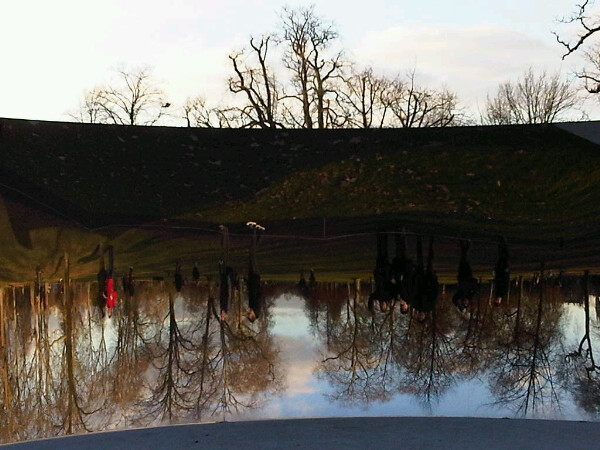
We also saw sculptures by Anish Kapoor placed throughout the park as part of an exhibit at the Serpentine.

The parakeets and Kapoor’s reflective sculpture gave the park a futuristic flavour.

The exhibition of Chinese robes at the V&A is in the same display space as was The Supremes exhibit in 2008 and the Grace Kelly exhibit a year later. Like those shows, which attempted to show the fashions of the times, there was not much context provided.

There were no graphs showing the historical trajectory of the emperors, empresses and concubines who wore them. No explanation as to how they were worn or who wore them, nothing about why these particular robes were on display.

Afterwards we took the 70 bus back to Bayswater and had red wine and dinner at the King’s Head pub on the Moscow Road in Bayswater. It’s my old childhood neighbourhood.

As I walked through the bit of park behind the Tate Modern towards home, I heard a bird I’ve encountered before singing away in the dark. This time I saw it up in the trees. A black bird with a glorious song. It seems bigger and blacker than the nightingale.

After I got home, my friend texted me to say it is the anniversary of the beheading of King Charles I on Jan 30, 1649.

He was born on the 9 November 1600, tried, convicted, and executed for high treason after the second of two civil wars that occurred during his reign from 1625 to his death.

Afterwards, during the Cromwellian Interregnum, England became a commonwealth and the monarchy was not reinstated until 1660 when Charles I’s son Charles II took up the post.
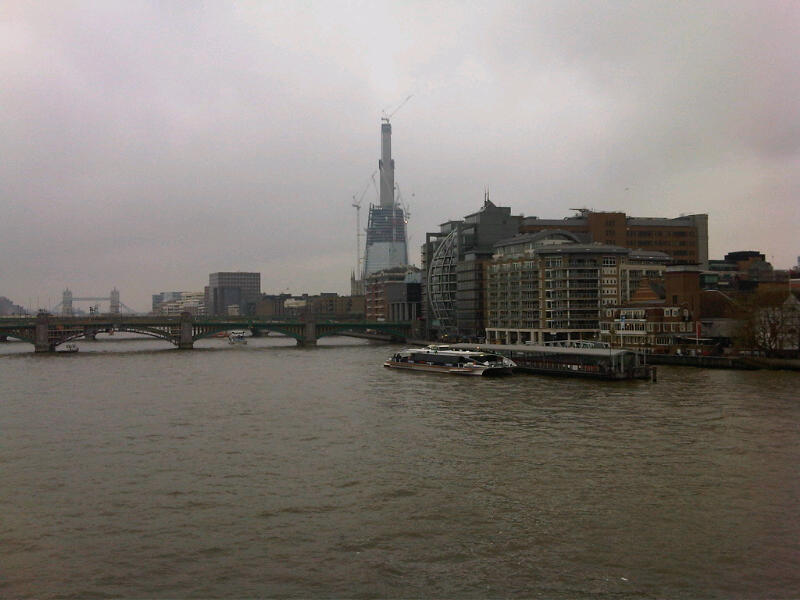
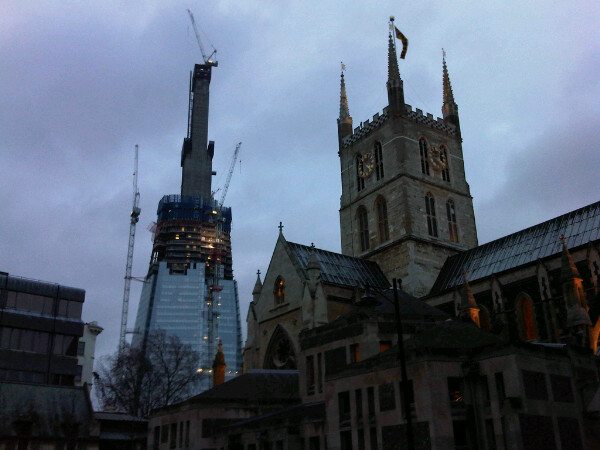
From Neo Bankside to The Shard


The Financial Times ran a story on November 19th, praising the redevelopment of London’s Bankside neighbourhood:

“Few places can boast a shop specialising in dog collars, professional boxing gyms and an international art gallery within a short walk of each other. But that’s what makes Bankside one of the most interesting areas of London. For years it suffered the legacy of war damage and industrial decline; a rundown riverside, empty warehouses and decrepit housing; its grimy streets overshadowed by the railway viaducts that lead to that most chaotic of terminals, London Bridge station. So close to the City of London, so near the West End, but so far away.

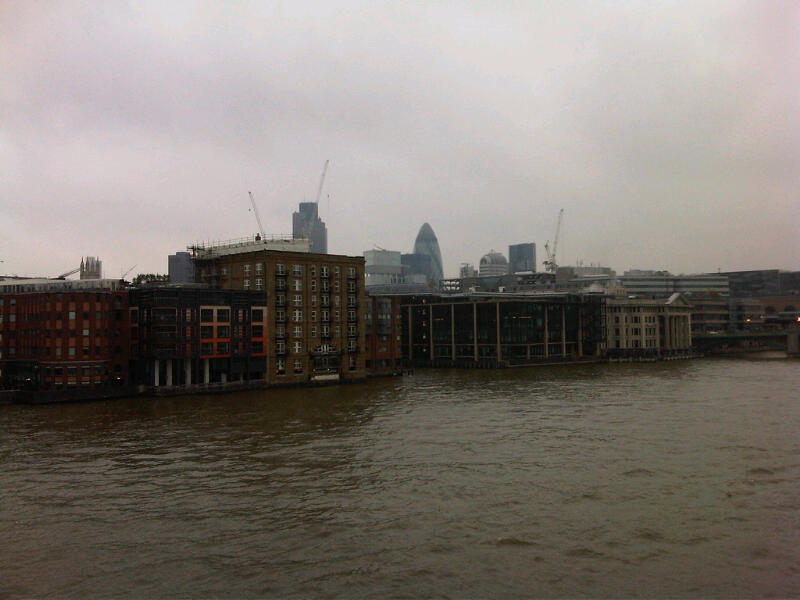
“Now all that is changing fast. Office blocks have shot up in the More London development and the Shard – a dramatic architectural statement that will be the tallest building in Europe – is to be unveiled in 2012.

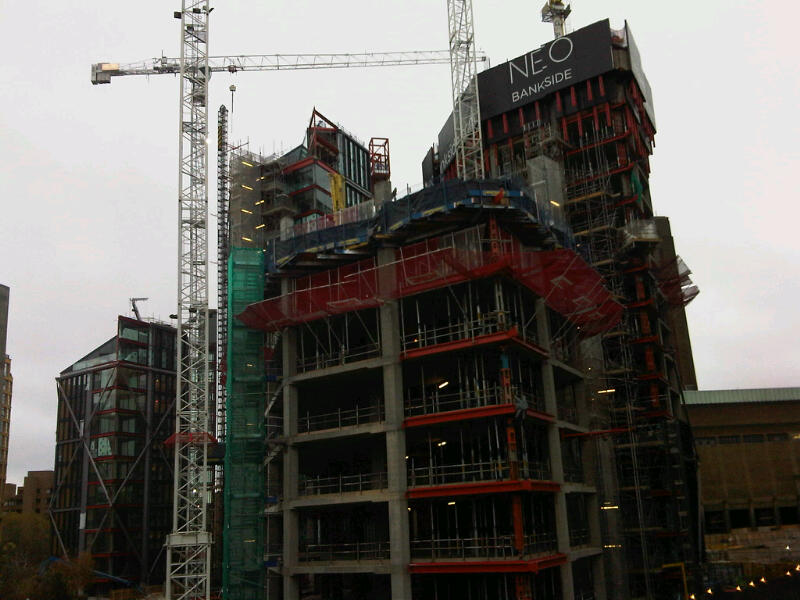
“Neo Bankside, a striking quartet of ‘pavilions’ emerging alongside Tate Modern . . .

“Nothing symbolises the area’s regeneration more than the Tate Modern, which opened in 2000,” the FT story states.

But will tower blocks be more appealing than warehouses and railway viaducts?

There is no doubt that modern architecture has a place in London, as it does in every big city.

But do we need to measure the impact of the increasing height of these buildings on London’s contemporary historic character?

The FT refers to the Shard, designed by architect Renzo Piano, and under construction behind London Bridge Station, as a “dramatic architectural statement”. The Shard will be a pointed high-rise 310 m (1,017 ft) tall (including 72 floors, plus 15 further radiator floors in the roof), entirely clad in glass.


“The shape of the tower is generous at the bottom and narrow at the top, disappearing into the air like a 16th century pinnacle, or the mast top of a very tall ship,” Piano says in an “inspiration” statement on The Shard website. “The architecture of the Shard is firmly based in the historic form of London’s masts and spires.”

But since the tall ships are long gone, how will it fit in with the historic form of London’s cityscape?

As a resident of the area, I have noticed that the Shard already dominates the Bankside landscape and beyond. Much like the Norman Foster-designed Gherkin building in the City, it appears “every place and no place”, standing out like an alien structure.


For example, The Tower of London is overshadowed by the appearance of The Shard behind it when approaching in a southerly direction from Tower Gateway to the north of the river, despite the geographical distance. As well, many of Bankside’s tiny streets are now dominated by the Shard.

The FT refers to the Neo Bankside project, designed by Rogers Stirk Harbour + Partners, as “‘a striking quartet of pavilions’ emerging alongside Tate Modern”, when in fact these four soon-to-be glass high-rise residential towers with red accents are still far from complete.

The view of Tate Modern, designed by Giles Gilbert Scott, from the St Paul’s side of the River Thames and the Millennium Bridge is already compromised because the structures jut up above it, detracting from the iconic appearance of the building.


There is nothing new about glass-clad, geometric buildings. Ever since German architect Walter Gropius designed the Fagus Factory (1911-13) major architects have focused on designs using glass and steel to construct buildings.